
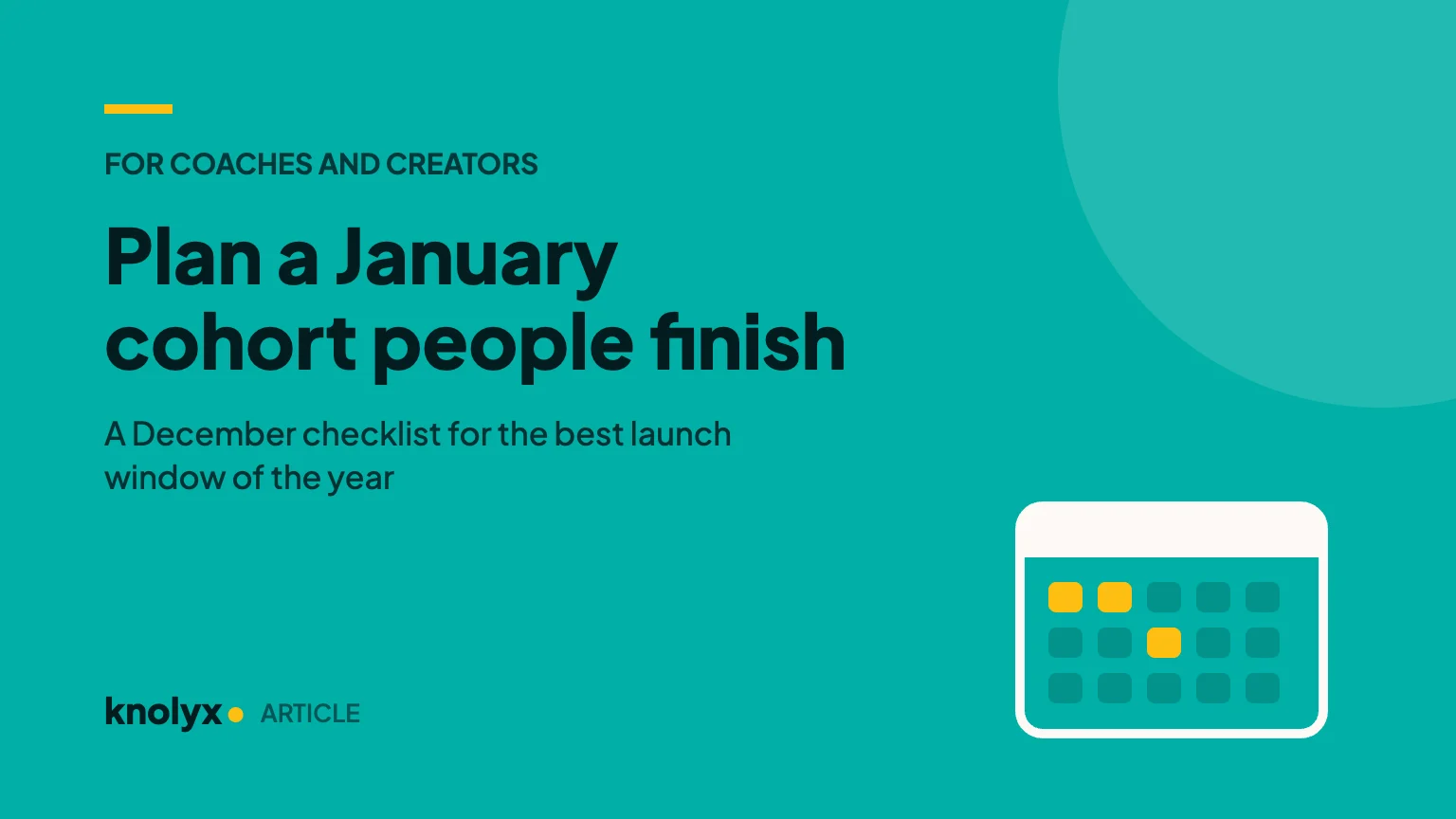
January is the busiest month of the year for anyone who teaches. People make plans, set goals and are more willing than at any other time to commit to learning something new. For coaches, consultants and course creators, it is the best launch window of the year. It is also the month when the most courses are started and abandoned.
The difference between a cohort that fades out by week three and one where most people reach the end is rarely the quality of the content. It is the structure around the content: when things happen, what people do between sessions, and who notices when someone falls behind. The good news is that this structure is easiest to set up in the quiet weeks of December. This article is a practical checklist for planning a January cohort that people actually finish.
Decide exactly who it is for
"Anyone who wants to get better at X" is not an audience. A cohort works when the people in it recognise each other's problems in the first session. Before you write a single lesson, answer three questions in one sentence each:
- Who is it for? A role, a stage, a situation. "Team leads in their first year of managing people" is specific enough.
- What will they be able to do at the end? One outcome they can describe to someone else.
- What do they need before they start? If there are prerequisites, say so now, not in week two.
A narrow audience feels risky when you are trying to fill places. In practice it makes the marketing easier, because the right people see themselves in the description immediately.
Plan the first week in detail
Most drop-outs happen early. If the first week is confusing, slow or empty, people quietly decide the course is not for them. Plan week one more carefully than any other:
- Day one welcome: a short video or message explaining what happens when, and what you expect from them.
- A quick win: one small task they can complete in under thirty minutes that produces a visible result.
- The first live session: early in the week, not at the end, so people meet each other while their motivation is highest.
- An introduction in the community: ask everyone to post who they are and what they want from the course. Reply to every post.
By the end of the first week each participant should have done something, met someone and heard from you personally.
Release content on a schedule
Giving people every lesson on day one feels generous, but it often backfires. Most people binge the first two lessons and then lose their place. Releasing content week by week, with drip release, keeps the group moving together:
- One module per week, released on the same day each week.
- Each module ends with a task to apply what they learned before the next live session.
- The live session discusses what people tried, not what they watched.
The schedule also creates a natural rhythm for your own work. You know exactly what you need ready, and when.
Build the community around the cohort, not the brand
A single large community feed for everyone who ever bought from you tends to go quiet. A channel per cohort, with people who started on the same day and are working on the same module, stays alive much longer. Some ways to keep it active:
- A weekly prompt on the day each module is released: "What are you trying this week?"
- Small groups of three or four people who check in with each other between sessions.
- Visible progress: celebrate people who complete a module or share a result, without singling out those who are behind.
The aim is that people come back because of each other, not only because of you.
Decide how you will notice who is falling behind
This is the question most course creators skip, and the one that decides how many people finish. Before launch, decide:
- What "behind" means. For example: has not completed the previous module two days before the next live session.
- Where you will see it. A progress view that shows each participant's status at a glance, not a spreadsheet you update by hand.
- What you will do about it. A short personal message usually works: "I noticed you haven't had time for module two. Want me to send you the ten-minute version?"
One personal message at the right moment keeps more people in a cohort than any amount of extra content.
Make enrolment and payment painless
The moment someone decides to join should be the easiest step in the whole process. If they have to fill in a form, wait for an invoice, pay through a separate link and then wait to be added by hand, some of them will not finish signing up. A good setup lets people find the course, pay and land straight in the right cohort, with the welcome message waiting for them.
Close the cohort well
The last week deserves as much attention as the first:
- A final live session where participants share what changed for them.
- A certificate for those who completed the path. People share these, which brings in the next cohort.
- A clear next step: an advanced module, a community for alumni, or the next cohort date.
Your December checklist
- Write the one-sentence audience, outcome and prerequisites.
- Plan week one day by day.
- Set the release schedule for every module.
- Set up the cohort's community channel and the weekly prompts.
- Define "behind" and how you will see it.
- Test enrolment and payment end to end.
- Plan the final week and the certificate.
Where Knolyx helps
Knolyx gives course creators and coaches one place for all of this, under their own brand: courses with drip release, cohorts and learning paths; live events with Zoom links; community channels per cohort; certificates when a path is complete; progress reporting to see who is falling behind; and a marketplace with Stripe payments, so people can pay and land in the right cohort without manual work. You can run it on your own domain, with branded emails and even your own mobile app.
If you are planning a January cohort, book a short walkthrough with the Knolyx team before the holidays, and we will set up your first course together.